

Perspective 1 – An introduction to data marketingDespite the experts’ ability to optimise acquisition campaigns continuously, acquisition costs in Switzerland rise year after year.
We are in an ever more competitive market, with an ever denser use of digital levers and a globalised regulatory landscape.
So many factors feeding the rise in cost per acquisition.
This rise is cyclical, and four main factors explain it:
Swiss e-commerce in full growth.
COVID-19 changed the consumption habits of the Swiss. For 77% of the companies surveyed in the Commerce Report Schweiz 2021, it is likely that online commerce’s market share will rise by 10% or more by 2030.
Source: 24.11.2021 – Swiss Confederation
Since 2021, consumers have been able to enjoy an ever more diversified offer.
The coronavirus changed consumer behaviour. Consumers rediscovered the diversity of the modern world of offers, online and cross-channel offers in particular. The lockdowns brought about a reset of buying habits and an upgrade in the skills for using smartphones and e-commerce.
Source: Datatrans – Commerce Report Schweiz 2021
Digital takes an ever more important place in the media mix.
On average, 74% of marketing leaders plan to raise their digital advertising spend, with 66% of that increase going to paid search.
Source: Gartner – CMO Spend Survey 2020-2021
Data regulation drives up the cost per acquisition – CAC (customer acquisition cost).
One important factor in the rise of CAC is the evolution of privacy rules, which have wreaked havoc in marketing departments the world over. The various Swiss and European laws have limited marketers’ access to consumer databases and changed the rules on how they can identify and target new potential customers using their personal data.
Source: NVP 2021
Data science in the service of acquisition.
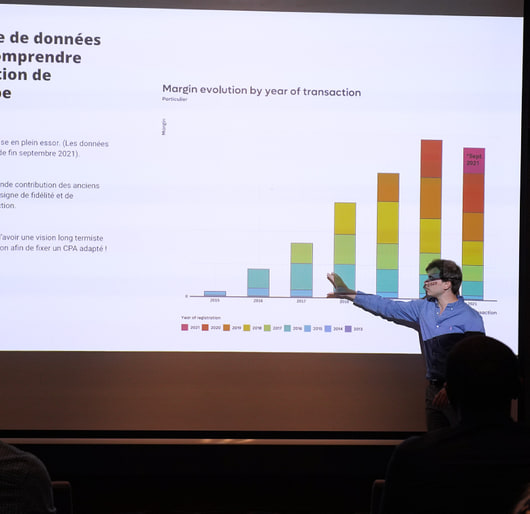

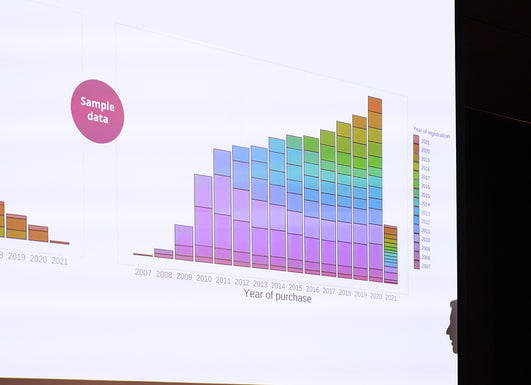

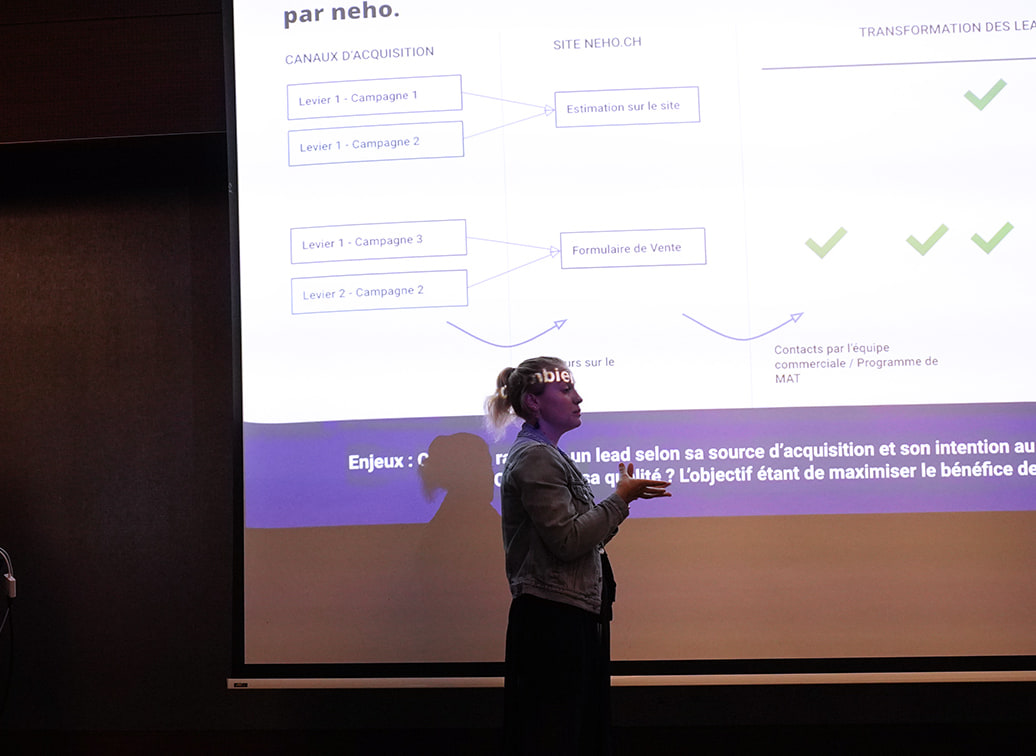
Marketing econometrics
Data science is a major tool for putting ROI-driven activity in place.
Data Tracking
Putting in place an ecosystem for collecting data in line with the FADP and the GDPR is a priority project for guaranteeing the success of acquisition campaigns.
Marketing Mix Modeling
Marketing mix modeling (MMM) makes it possible to account for the effects of offline channels, and lets us identify the high-impact media levers so as to allocate the marketing budget better.
Today’s technologies make it possible to build high-performing omnichannel reattribution models, and so to create a media plan optimised by mathematics. That is what we have called marketing mix modeling.
Marketing platforms provide estimates of the number of conversions they generated over a given period.
Those estimates are nevertheless not 100% reliable. They depend on the quality of the tracking, measurement methodologies can differ from one channel to another — which sometimes makes comparisons between them of little significance — and manual parameters have to be set within a platform.
These questions are a source of complexity and make it hard to estimate each marketing channel’s “total impact”. What is more, offline marketing channels have no reporting platforms. A year later, the second edition of Perspective extended this thread with La Redoute’s marketing mix modeling.



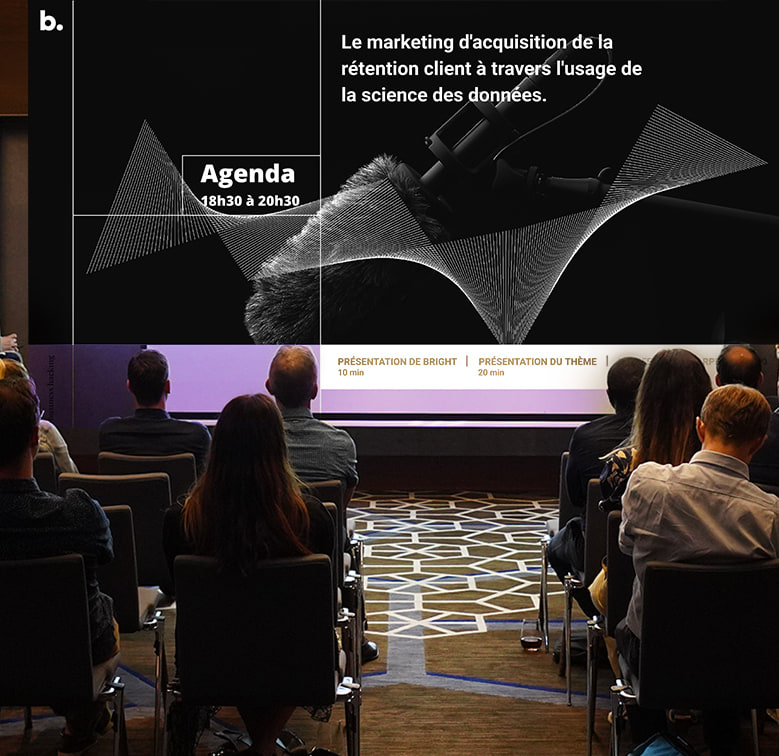
Fancy spending an excellent evening with us?
Perspective is an annual event offering a series of talks dedicated to data marketing. Get in touch to receive your invitation!
Data science in the service of customer retention.
Faced with the challenges of customer acquisition, loyalty is becoming a major axis of development for companies in 2022.
They have to balance their investments so as to strengthen their customer retention strategies, and so devise a hybrid strategy capable not only of acquiring profitably but also of activating customer retention that performs.
Retention is a key strategy for raising customers’ average LTV and so reaching more expensive, high-impact media channels (TV, for instance).
Here again, four arguments support the point:
A paradigm shift between acquisition and retention.
According to Gartner, “the COVID-19 crisis has shifted CMOs’ attention from customer acquisition to customer retention and growth”. Likewise, Forrester forecasts that “spend on loyalty and retention marketing will rise by 30%, with CMOs asserting their control over the full customer lifecycle”.
Customer experience at the centre of all attention.
43% of consumers would be prepared to pay more for greater convenience, while 42% would pay more for a personalised and welcoming experience. More striking still, 65% of consumers said that a positive experience with a brand carried more influence than good advertising.
Source: PwC’s study on CX
A company’s valuation is also calculated through its retention rate
Fast revenue growth is no longer the only argument in a valuation. The retention rate is an indicator of value for companies.
Source: Forbes – Don’t Buy Casper, The Latest Money-Losing IPO
The loyalty programme in the service of zero-party data
Loyalty programmes will establish themselves as a winning way of collecting data while respecting customers’ privacy and consent. In 2021, loyalty programmes emerged as the most viable way of sourcing data ethically and legally, on the basis of consent, while answering the expectations of consumers in search of a personalised relationship with their brand.
Sources: Salesforce & Annex Cloud
Churn prediction
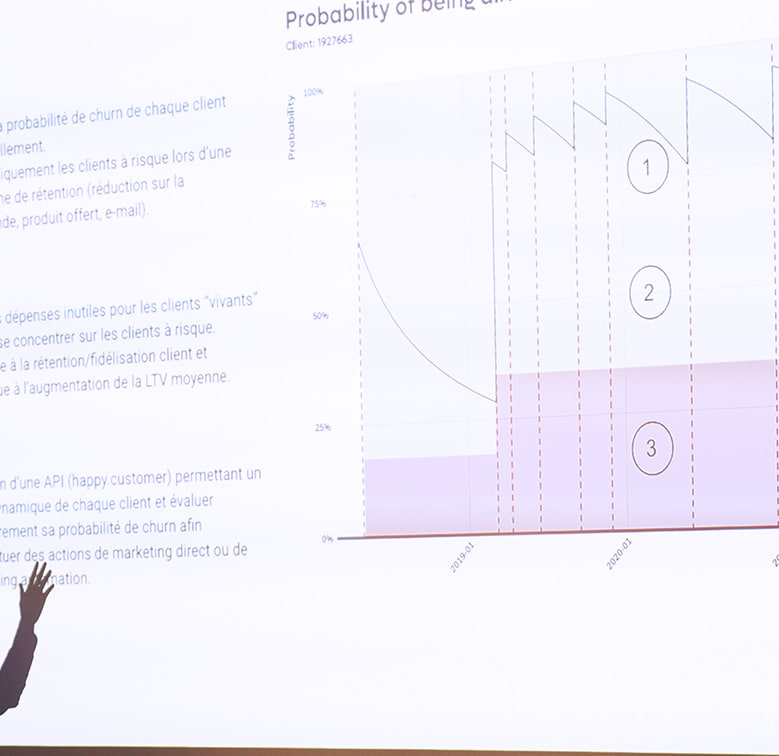
Data science makes it possible to put in place algorithms capable of predicting the risk of a customer leaving.
In an e-commerce context (products as well as services), we never know for certain whether a customer is between two purchases or has left for good.
Anticipating churn is a strategic approach to keeping consumers loyal.
We use a sales-based algorithm that calculates the probability of being alive against a few key criteria, and does so individually for each customer. That helps us target the customer at the right moment and contributes to raising customer loyalty.
The objective is to be able to calculate the probability of being alive for a specific customer at a given moment. Rules can then be set to target the customer differently according to their risk of churning.
To find out more, read our article on customer churn and discover our happy.customer API.
In conclusion – in 2022, to create a company’s growth, that company has to put in place personalised activity serving both acquisition and retention. Faced with these challenges, data science is a strategic tool capable of bringing concrete, pragmatic answers.
The series : Perspective, bright's annual evening




- Tracking and data collection8 publications
- Marketing Mix Modeling10 publications
- Lifetime value and retention8 publications
- Performance management19 publications


The key skills bright can bring to you