


Google showed us the future of Search
Andréa Schollhammer Escribano
· 4 min
Search is going through its greatest transformation since the arrival of mobile. For advertisers it is no longer only a matter of capturing demand as it is expressed: you have to invest in creating it too.
Swipe left to read
Keep reading
Search is going through its greatest transformation since the arrival of mobile. For advertisers it is no longer only a matter of capturing demand as it is expressed: you have to invest in creating it too.
At Perspectives 5 we had the pleasure of welcoming Elena Sara Zamora Alzerreca, Strategic Partnerships Development Manager at Google, who came to share her view of the future of Search and the latest developments driven by artificial intelligence.
For us, these exchanges carry a particular resonance. As a Google partner agency, we have the chance to work closely with its teams and to reach new features, beta programmes and innovations regularly, before they are rolled out widely.
And after this talk, one thing is clear: Search is going through its greatest transformation since the arrival of mobile. Several of these signals, from conversational search to Google Lens, had already been presented at the Google Premier Partner Summit in Dublin, in 2025.
Here are the main lessons we take away.
Search becomes conversational
For years, people learned to speak the language of search engines: a few keywords, short queries, often simplified.
With AI, that logic is reversed.
Users can now phrase their searches as they would in a conversation: ask a complex question, bring context, set out their needs and follow up on the answers they get.
In practice, that means search journeys become far richer and far less predictable.
For advertisers, it also changes how to approach Google Ads.
The aim is no longer only to cover a list of keywords. You have to let the algorithms understand the intent behind the searches and make the link with the most relevant products, services or content.
That is the direction in which the developments of AI Max for Search and Performance Max are heading, letting Google identify opportunities that traditional keyword-only strategies might have missed.
Tomorrow, the best-performing campaigns will be those able to make full use of these new signals of intent.
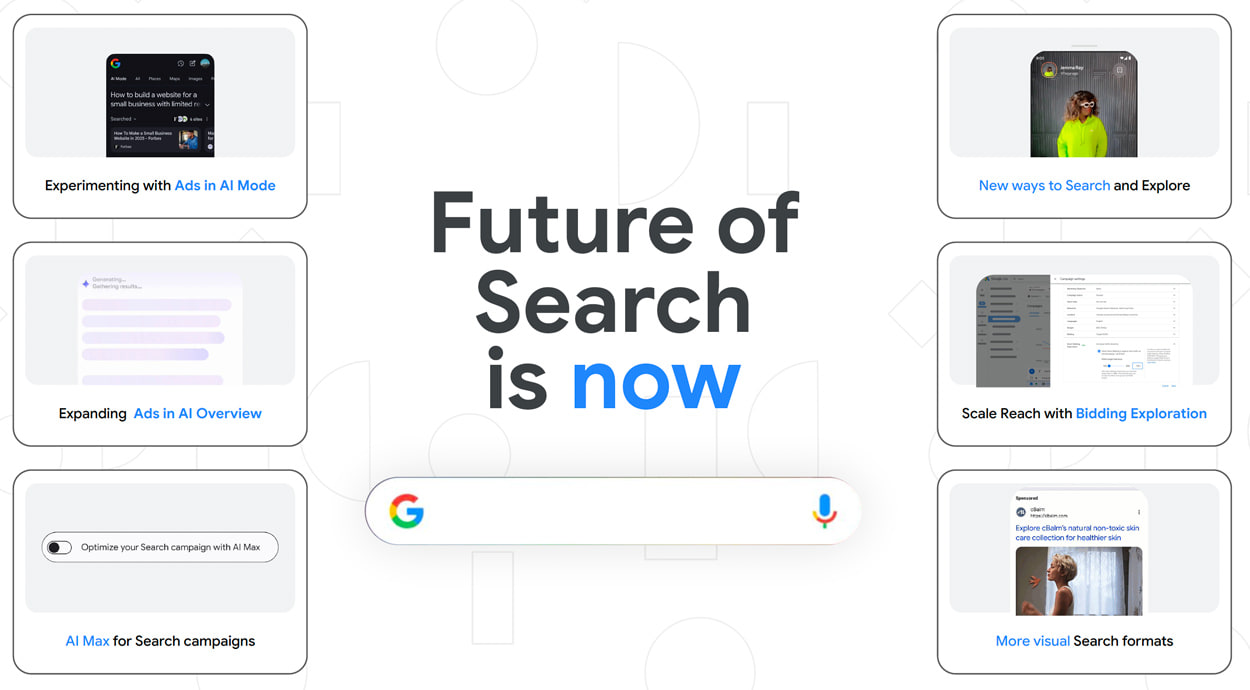
Visual search becomes a business lever
Another strong trend Google put forward: the explosion of visual search.
Today, billions of searches are made every month through Google Lens. Users photograph a product, a garment or an object to get information instantly, or to find where to buy it.
For brands, that change is far from anecdotal.
Visibility no longer depends on text ranking alone. It depends also on the quality of the visuals, the product feeds and the data passed to Google.
Shopping catalogues have to be complete, structured and enriched. Product titles, descriptions, attributes and images play an ever more important part in a brand’s ability to appear in these new search journeys.
In other words, a good Search strategy is no longer limited to keywords: it also calls for real work on visual content and product data.
Shopping enters the age of AI
Google also presented its view of tomorrow’s commerce.
The aim is simple: to remove as much friction as possible between the intent and the act of buying.
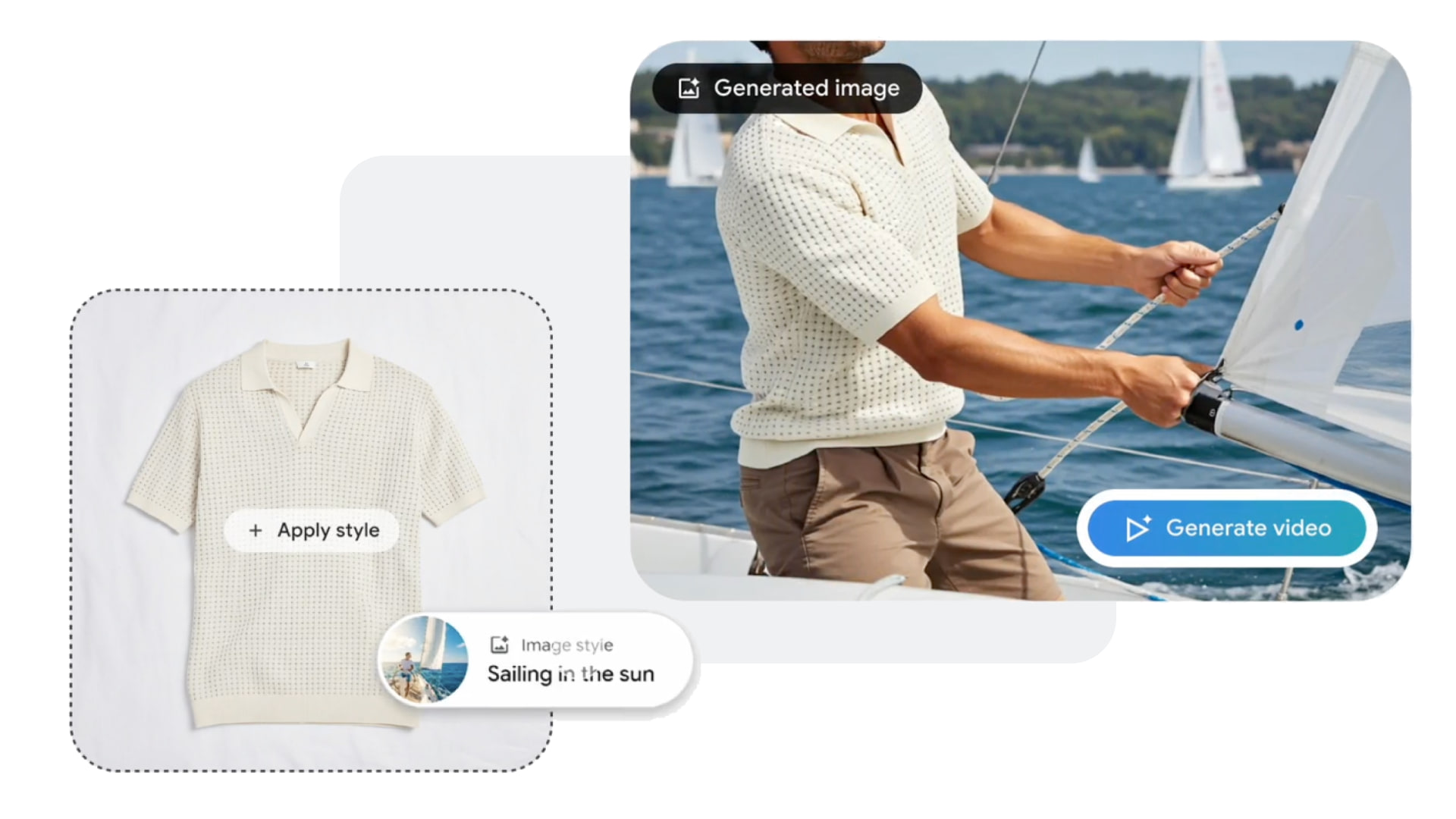
Virtual try-on, personalised recommendations, automated product comparison, assistance throughout the buying journey — artificial intelligence takes a growing place in the shopping experience.
We do not yet have all the details on how these experiences will work, nor on the exact part Google will play in the transaction itself. But the direction is clear: users will be able to do more directly from Google’s own interfaces.
For e-commerce businesses, that means providing product data that is dependable, complete and constantly up to date becomes essential.
The website obviously remains a strategic asset, but it now sits within a wider ecosystem where Google plays an ever more important part in discovery, comparison and, potentially, purchase.
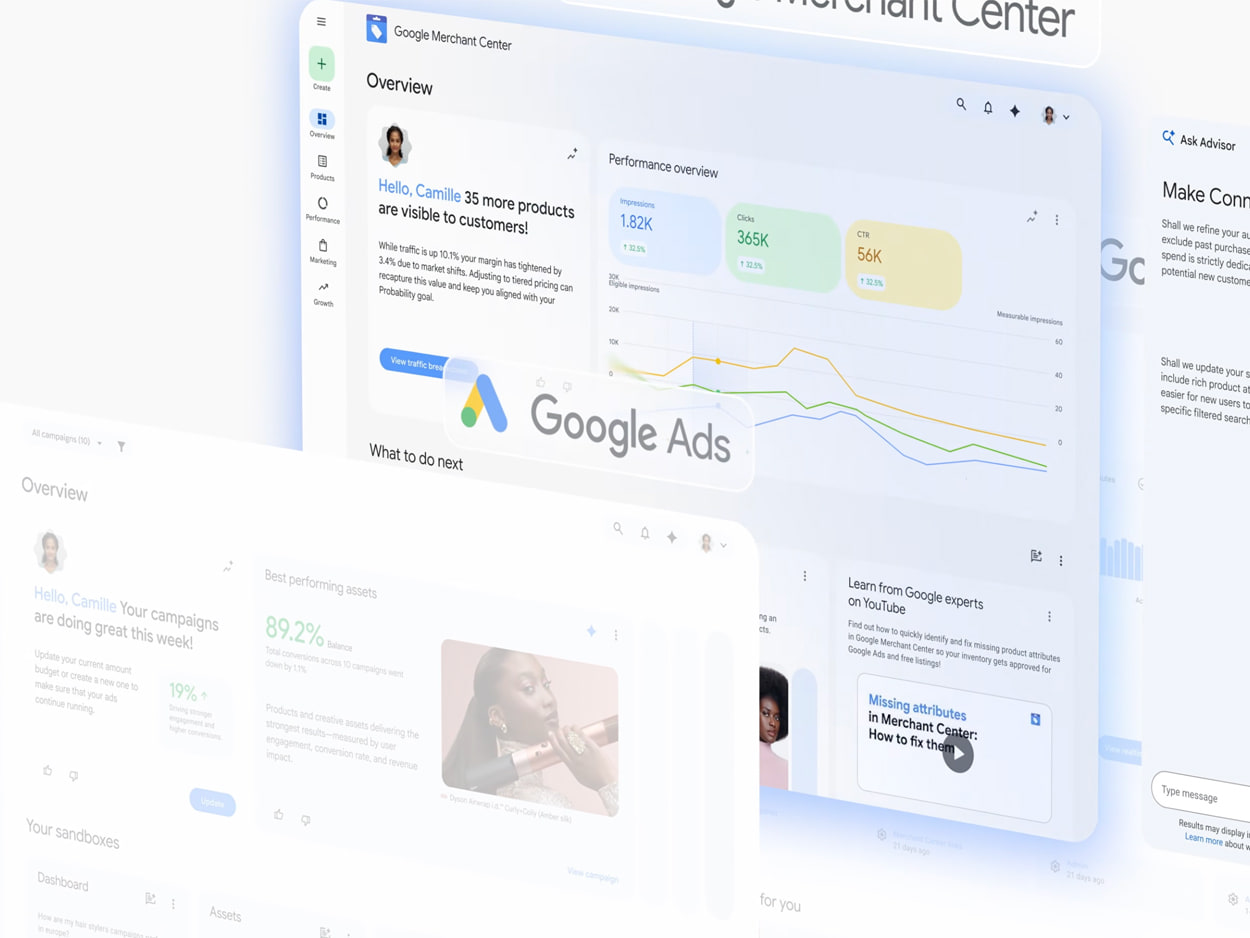
Meet Ask Advisor. Drive ROI with a helpful agent built with Gemini capabilities
Brands have to create demand, not only capture it
One of the most interesting lessons of the Perspective 5 talk of 4 June 2026 concerns how Search’s part in the buying journey is changing.
Historically, Search campaigns came in once the intent was already expressed. The user looked for a product or a service and the brand had to be there at the right moment.
With the new AI-driven experiences, Google comes in far earlier in the thinking.
People now use Search to discover, to compare, to explore or to find inspiration, before they have even chosen a brand or a product.
For advertisers, that means no longer reasoning only in terms of capturing demand.
You have to invest in creating it too.
That is where levers such as Demand Gen, YouTube, Performance Max or the new AI solutions take on their full meaning. The question is no longer only how to be visible when a need already exists, but also when it begins to emerge.
The best-performing strategies will be those able to orchestrate all those levers intelligently, within one coherent journey.
What it means for our clients
Beyond the announcements, the main lesson of this talk is that artificial intelligence is already transforming the way users search, discover and buy.
Those changes are as much opportunity as challenge for brands.
At bright, our role is precisely to support that transition.
Through our partnership with Google, we regularly reach beta programmes, new features and innovations that we can test before they are rolled out more widely.
That lets us identify the most relevant opportunities quickly, try new levers, and help our clients stay a step ahead.
Because the future of Search is no longer a five-year vision.
It is already transforming today’s marketing strategies.
The series : Google Ads, from Performance Max to AI Max

- Search and Google Ads11 publications
- Performance management19 publications
- Social media6 publications
The key skills bright can bring to you