

TikTok in 2026: from discovery to conversion
Théo Lecoanet
· 5 min
TikTok becomes a complete actor in the user journey, able to come in at every stage. Adapting existing campaigns is no longer enough: it calls for specific strategies, centred on content and intent.
Swipe left to read
Keep reading
TikTok becomes a complete actor in the user journey, able to come in at every stage. Adapting existing campaigns is no longer enough: it calls for specific strategies, centred on content and intent.
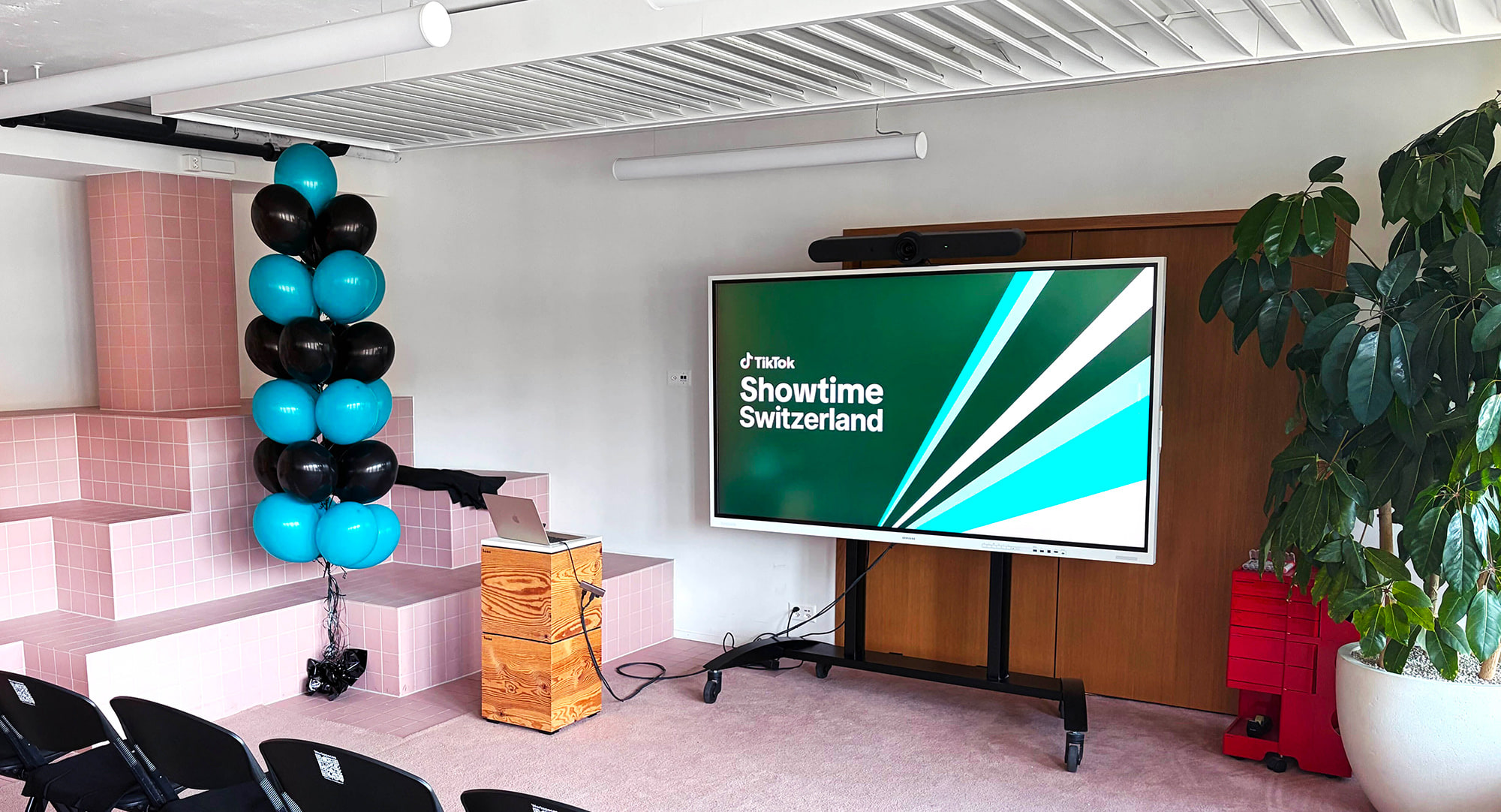
Long seen as an entertainment platform, TikTok is today crossing a strategic threshold. At an event held in Zurich, the local teams shared their vision for 2026, confirming a shift already visible in the market: TikTok no longer stands as a simple social channel, but as a structuring actor in the user journey.
Behind the product announcements and the growth figures, what is taking shape above all is a change of logic. TikTok no longer seeks only to capture attention. The platform now intends to play a part along the whole funnel, from discovery to conversion, by way of search and consideration.
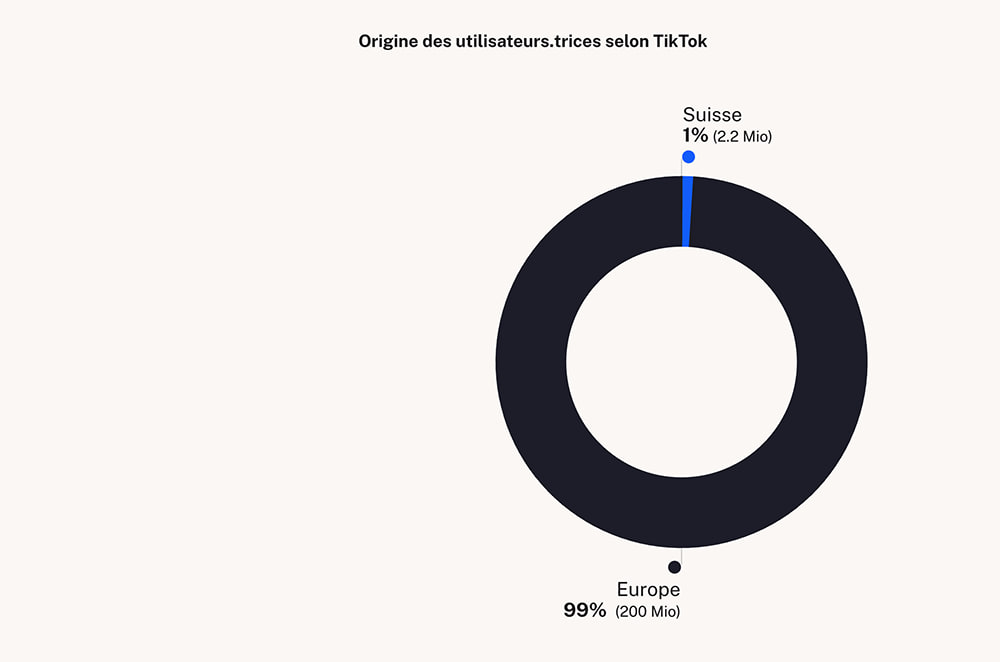
About one in a hundred of TikTok’s European users lives in Switzerland
TikTok users claimed by the platform: Switzerland (about 2.2 million) within the European total (more than 200 million), as a share of that total
each square stands for 1% of TikTok’s European users, about 2 million people; the blue square is Switzerland.
Source: TikTok, figures presented in Zurich and quoted in the article; data more than a year old, Switzerland included in Europe · Chart: bright.swiss
A local footing that confirms TikTok’s ambitions
The opening of TikTok’s office in Switzerland in 2025 marks an important stage in the platform’s development. In less than a year, the teams have taken shape and now actively support the market’s main advertisers.
That local presence is part of a wider movement. TikTok today claims more than 200 million users in Europe, of whom around 2.2 million in Switzerland — a figure probably underestimated, since the data available is more than a year old.
Beyond the volume, the particularity of the audience is a key element. A significant share of TikTok users are not present on other major platforms. That positions TikTok as an incremental acquisition lever, able to reach audiences hard to touch through more traditional means.
From social platform to engine of discovery
The first major lesson concerns TikTok’s part in generating demand. Unlike Google, which captures an existing intent, TikTok comes in upstream of the user journey.
The platform works above all as an engine of discovery. Users do not arrive with a precise objective, but with an expectation about the content. That changes the marketing logic deeply. It is no longer only a matter of answering a demand, but of creating it.
That ability to influence behaviour rests on one central element: content. TikTok insists strongly on this point, saying the platform does not merely reflect culture but actively helps create it.
A new kind of search emerges
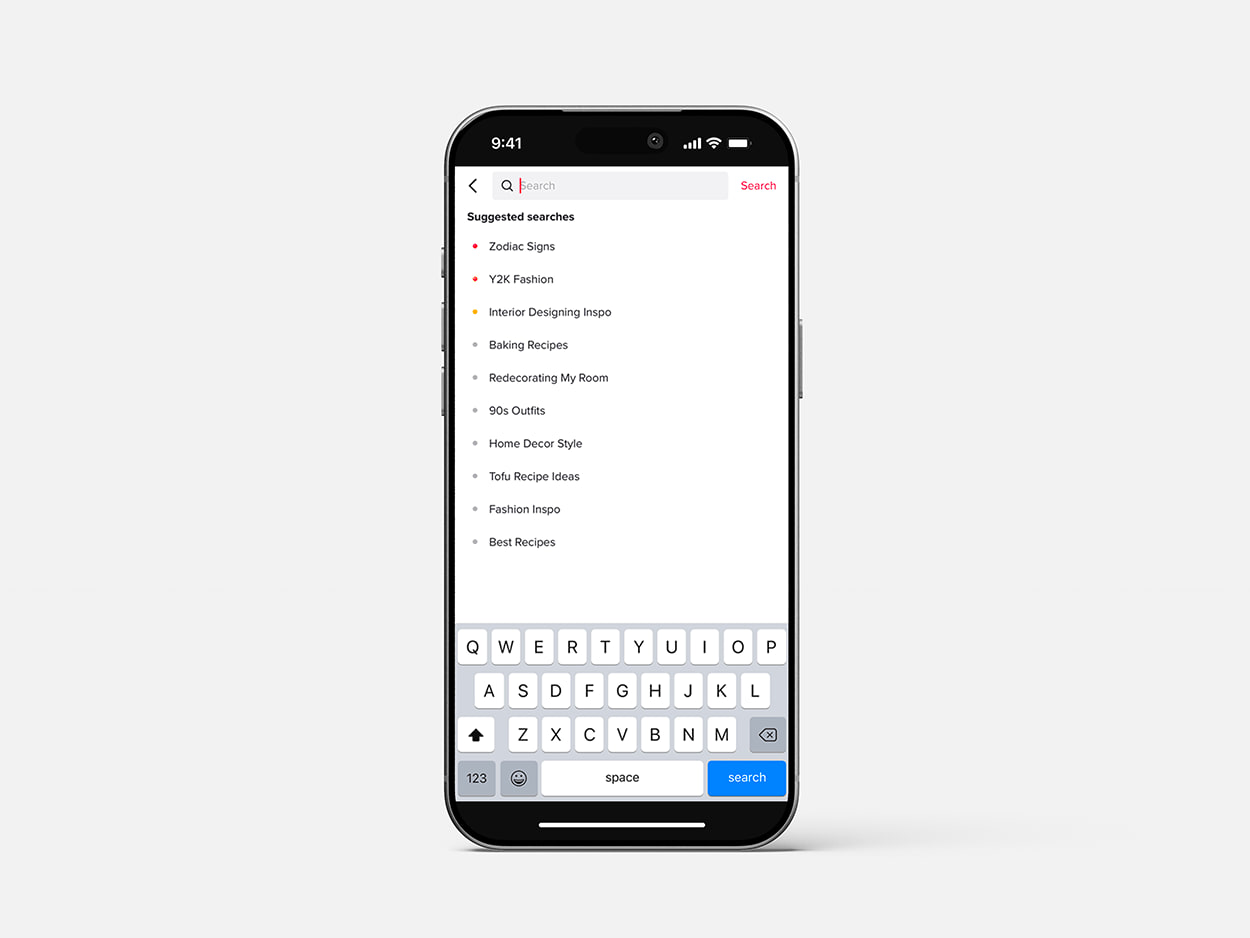
One of the most strategic lines presented at the event concerns the development of search on TikTok. The platform sees rapid growth in search use, with a significant rise in the volume of queries.
But that search does not follow the traditional codes. It is less transactional and far more exploratory. A user can start from a simple search and move towards wider content consumption, guided by the algorithm’s recommendations.
That calls the classic approach to search marketing into question. It is no longer enough to place yourself on precise keywords. It becomes necessary to think in terms of content journeys, and of the ability to hold attention in varied environments.
TikTok search interface – 2026
Rethinking consideration
Another structuring point concerns the consideration phase, often under-used in digital strategies.
TikTok puts forward a simple observation: most advertisers concentrate on awareness or conversion, leaving a gap between the two. Yet that middle phase plays a determining part in the decision to buy.
The platform proposes a different approach, built on the analysis of many behavioural signals. Rather than optimising a single indicator, TikTok aggregates different kinds of interaction — viewing, engagement, search, product-related behaviour — so as to identify audiences genuinely in a phase of consideration.
That approach captures intent better and improves the campaigns’ overall effectiveness, by working on audiences that are already engaged.
How user expectations are changing: authenticity and emotion
The trends presented for 2026 also bring out a shift in what users expect.
After a period marked by the rise of artificial intelligence, TikTok sees a return towards more authentic content. Users look for formats that are less perfect, more spontaneous, and give growing weight to the human dimension of brands.
In that context, performance no longer rests on rational arguments alone. Buying decisions now carry a stronger emotional dimension. Users expect brands to express values, to tell a story and to belong to communities.
That shift means rethinking the part advertising content plays, which has to sit naturally within the platform’s environment.
Campaigns thought of as cultural movements
TikTok also introduces a different reading of campaigns, placing them within “moments”. Whether global events, seasonal high points or product launches, each activation turns on three phases: anticipation, amplification and extension.
That approach reflects how the platform itself works, where trends build and spread over time. For brands, the question is how to join those movements rather than ignore them.
Not being present at those moments means letting others define the narrative around your brand.
Creative as the main lever of performance
Finally, TikTok puts forward a very operational question: content production. Demand for creative has risen sharply in recent years, which places creation at the heart of performance.
In that context, the platform is developing automation and artificial intelligence solutions, aimed at making production easier and raising the volume of tests. The aim is twofold: gain in efficiency, and answer the expectations of an environment where creative renewal is constant.

Conclusion
What this event reveals is above all a strategic repositioning of TikTok. The platform no longer limits itself to distribution. It now stands as a complete actor in the user journey, able to come in at every stage.
That shift obliges advertisers to rethink their strategies. It is no longer simply a matter of adapting existing campaigns, but of designing specific strategies, centred on content, on intent and on understanding behaviour.
In that context, TikTok should no longer be seen as an experimental channel, but as a structuring lever within a digital ecosystem in full transformation. That is how it figures in the campaigns we run for our clients on the social platforms.
Going further
- Performance management19 publications
- Social media6 publications



The key skills bright can bring to you