


Decoupling through AI
Darko Macoritto
· 5 min
Automating decoupling with AI offers a scalable alternative to manual offshore production: costs fall sharply, time to market speeds up, and testing many creatives becomes simpler.
Swipe left to read
Keep reading
Automating decoupling with AI offers a scalable alternative to manual offshore production: costs fall sharply, time to market speeds up, and testing many creatives becomes simpler.
Introduction
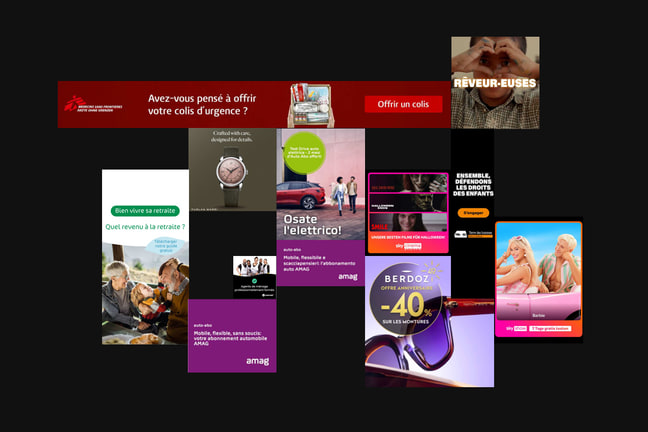
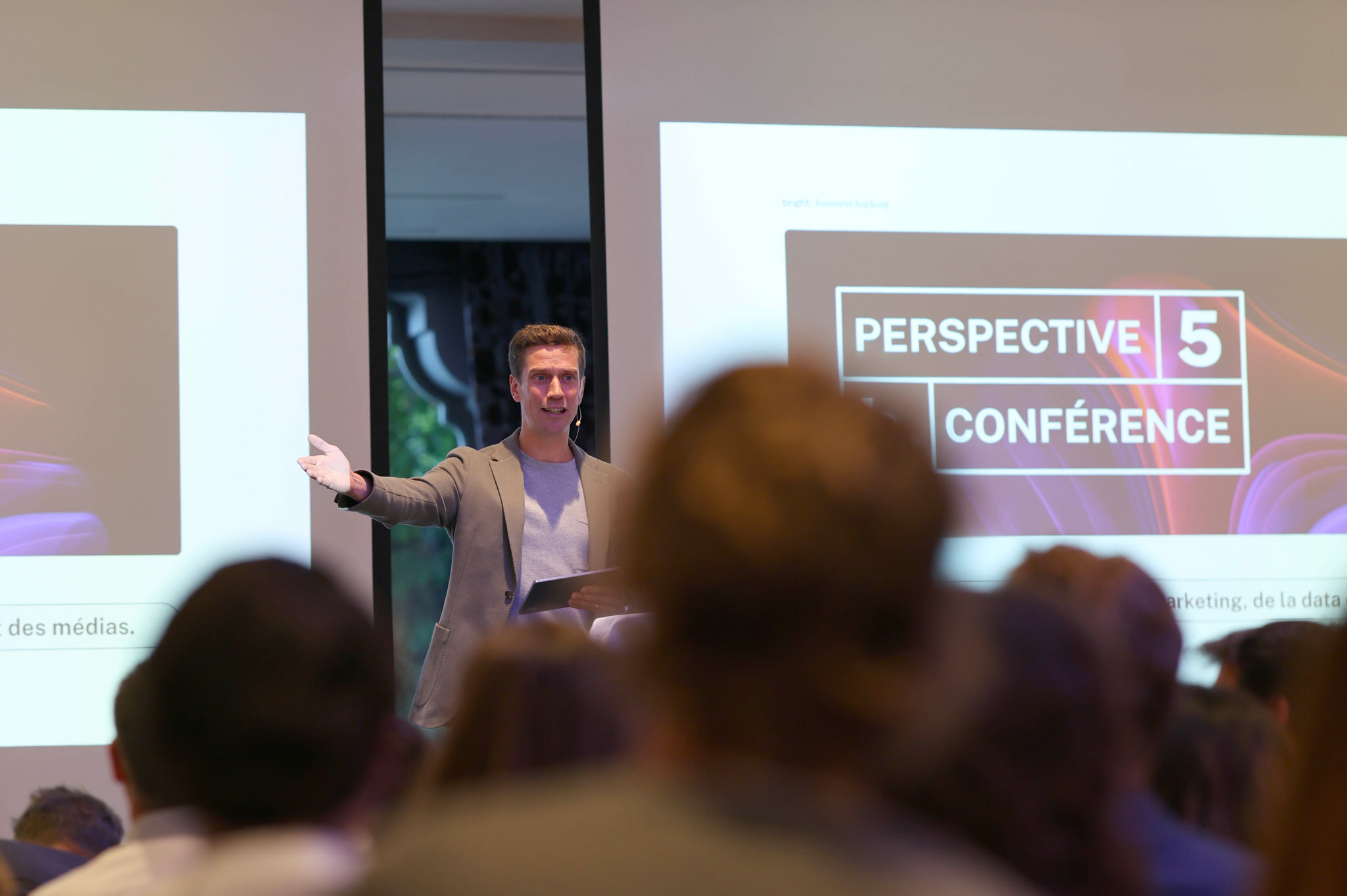
Decoupling advertising assets is an essential process in any strategy for running on advertising platforms such as Facebook, Instagram or TikTok. Each platform offers several ad formats, so as to display content well on the size and kind of screen the user has. For Sky Show, a decoupling method produces nearly 5,000 banners a year, as we showed at Perspective 5.
That need to multiply assets by surface and by format has led many Western companies to offshore the task outside Europe, mainly to cut labour costs, often high on the continent.
With new technologies emerging — artificial intelligence and automated image generation in particular — we explored the possibility of carrying out decoupling entirely automatically, which offers an innovative, scalable alternative to manual (offshore) production.
How the solution works
Here we present the method we developed in house, setting out the key stages of the process and the questions met along the way.
It matters to underline that this technology is in constant movement. The quality of the results and the processes used will therefore improve quickly, as artificial intelligence tools advance.
Step 1: defining the formats
The first step is to define the output formats we want to produce, and the input format of the original asset.
Each advertising platform — Facebook, Instagram, TikTok and the rest — offers a variety of formats fitted to different kinds of display: story, feed, reel and so on. For Facebook, for instance, we might consider the formats described below.
A crucial point at this stage is choosing a reference original format from which all the others will be derived. Suppose the starting asset is an image of 1280 × 720 pixels, a 16:9 ratio. That format then serves as the base from which to generate the other variants automatically, while preserving the essential elements of the composition.
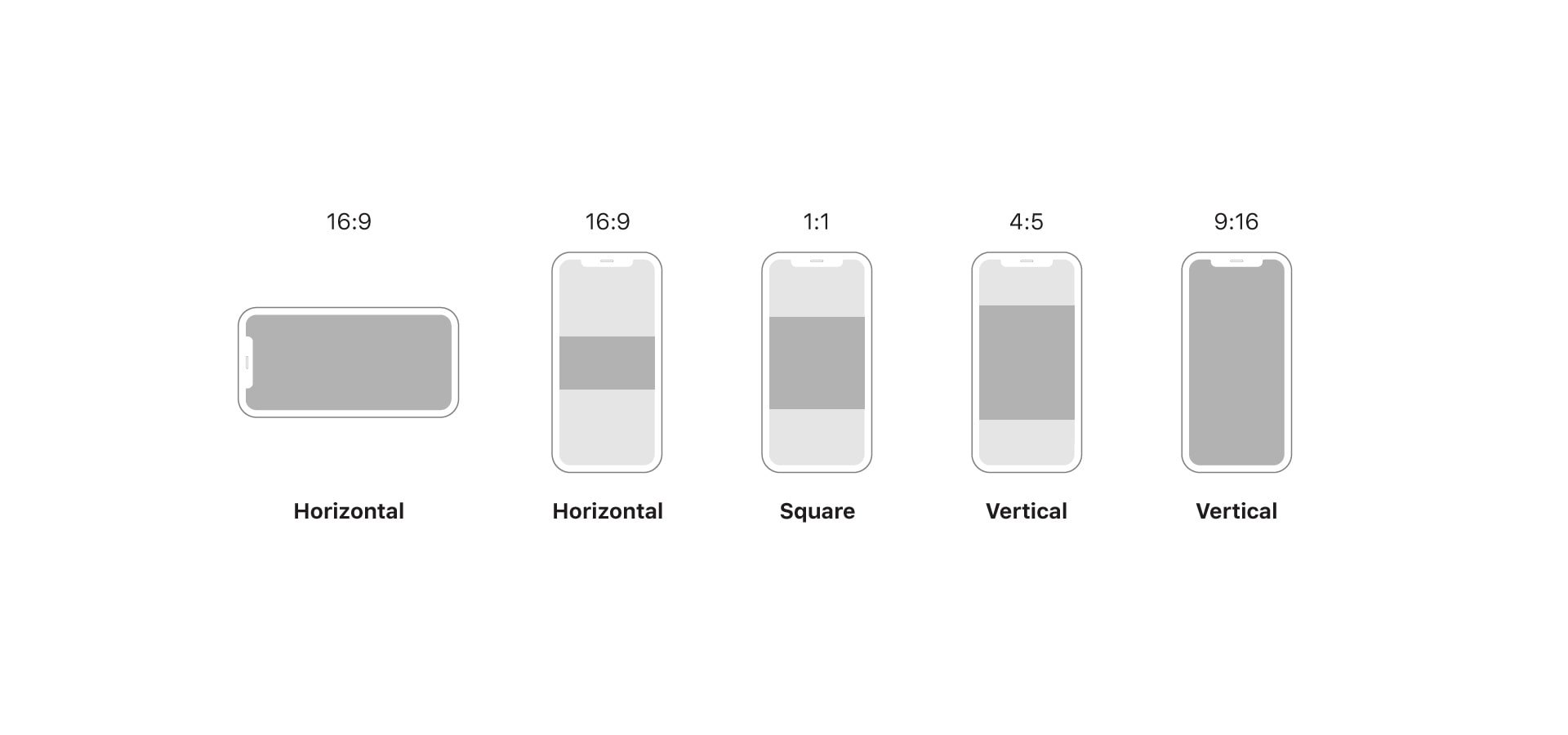
Example of the formats available for media campaigns on Meta.
Step 2: fitting the format
Except for the 16:9 format — where the original asset can be used as it is — the other formats call for a change in the image’s dimensions, so as to fit the ratios required. Two approaches are possible: cropping, or resizing with content generation (covered in the next step).
Cropping the image
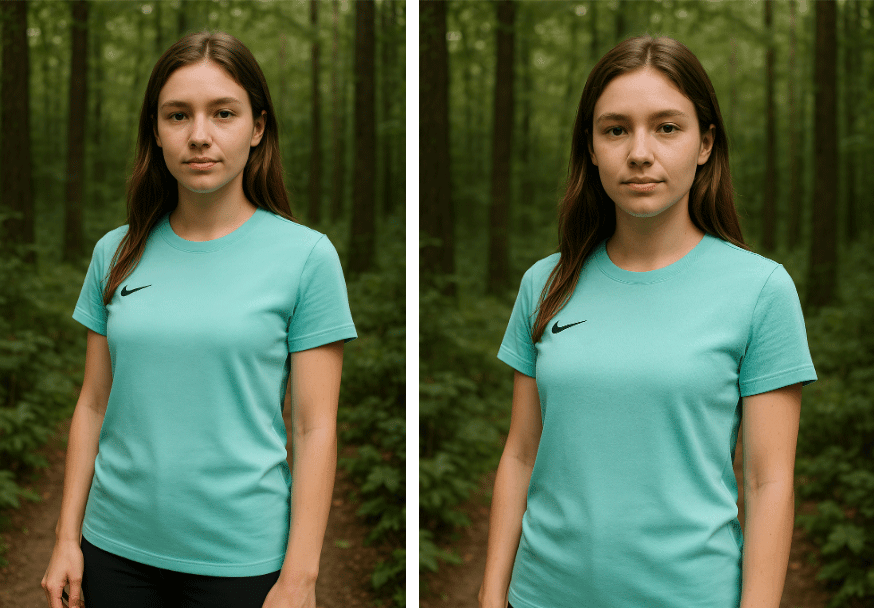
- When cropping, it is essential to preserve the visually important elements of the image. A random crop risks compromising the visual’s legibility or its impact. On a photo showing a person, for instance, it is wiser to cut the bottom of the image than to remove part of the face (see below).
- To automate that decision, we built in an artificial intelligence model able to detect the areas of interest — faces, products, text — and to settle the best crop. The algorithm therefore optimises the framing while losing as little essential information as possible.
Resizing
In certain cases — notably for wider or more vertical formats — it is better to enlarge the image than to crop it. That approach preserves the whole of the original visual, while respecting the new dimensions required.
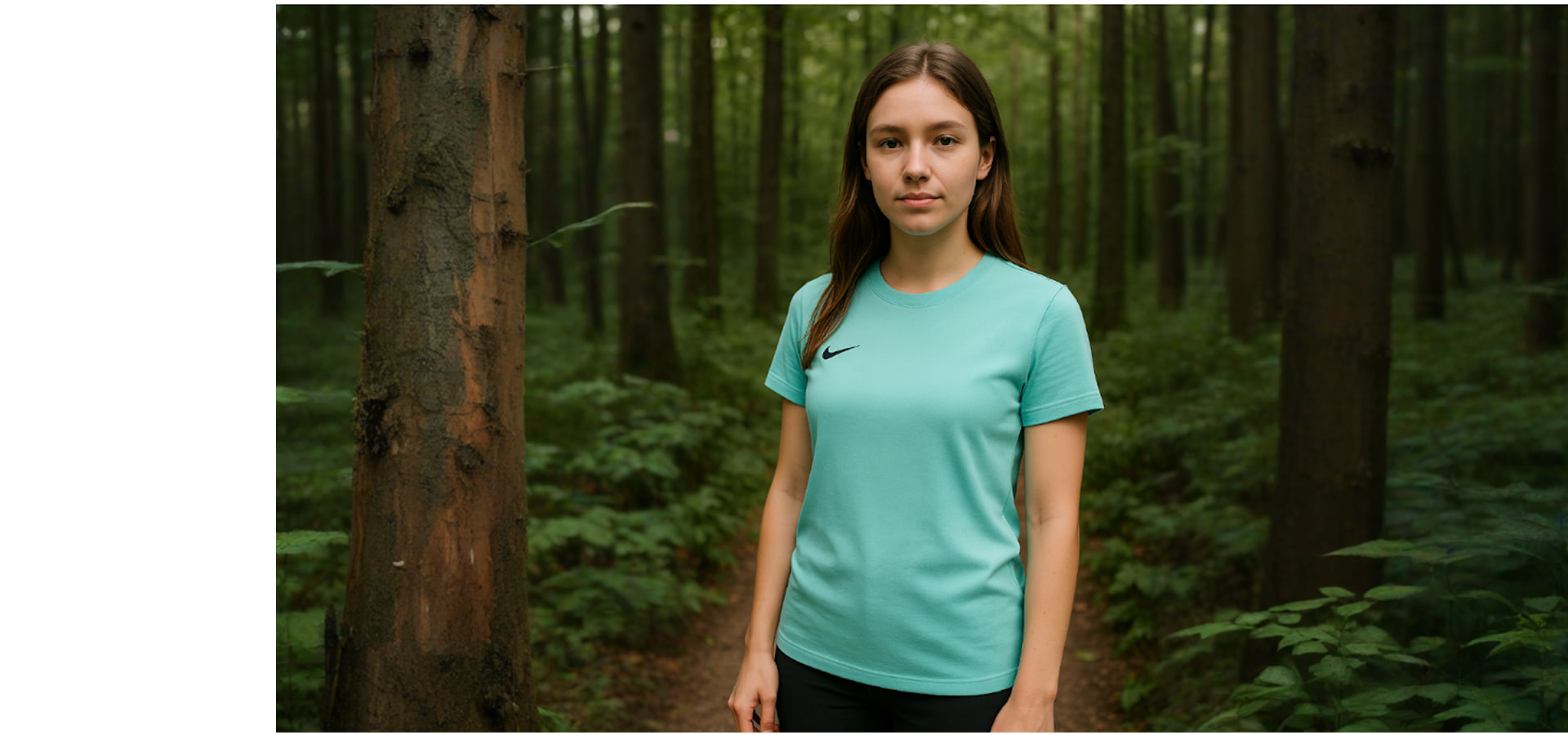
To that end we use generative artificial intelligence models able to complete the edges of the image realistically. That technique, often called outpainting, adds visual content coherent with the style, the textures and the elements of the original image.
Outpainting, or uncrop, is an operation by which artificial intelligence can be asked to complete the missing parts of an image.
Step 3: placing the logo
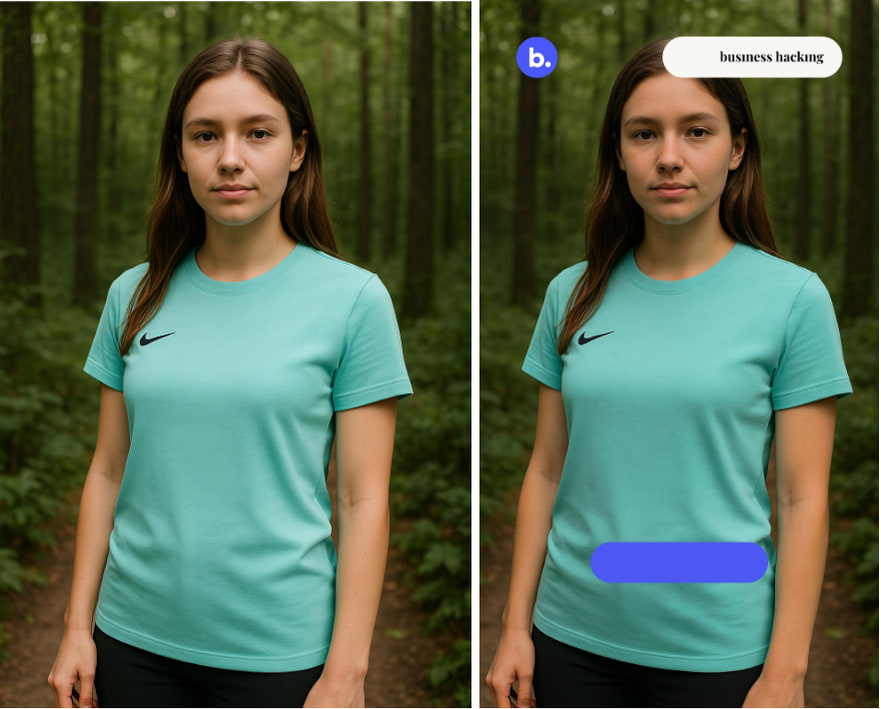
One of the main challenges met with current artificial intelligence solutions is the lack of fidelity in reproducing precise graphic elements, such as logos or typefaces. The models tested often tend to alter those elements slightly, which can harm a brand’s visual identity.
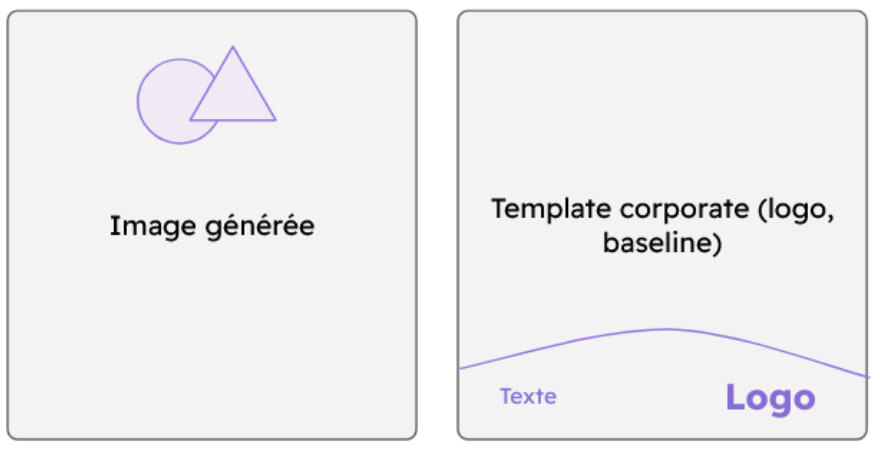
To get round that limit, we chose a hybrid approach: applying a mask holding the logo by hand onto the generated image. That method secures a perfect rendering of the logo, without distortion or approximation.
It does, however, call for initial configuration work, with a specific mask created for each format of advertising asset. That mask is then laid over each visual automatically, in the right place.
Step 4: adding text (optional)
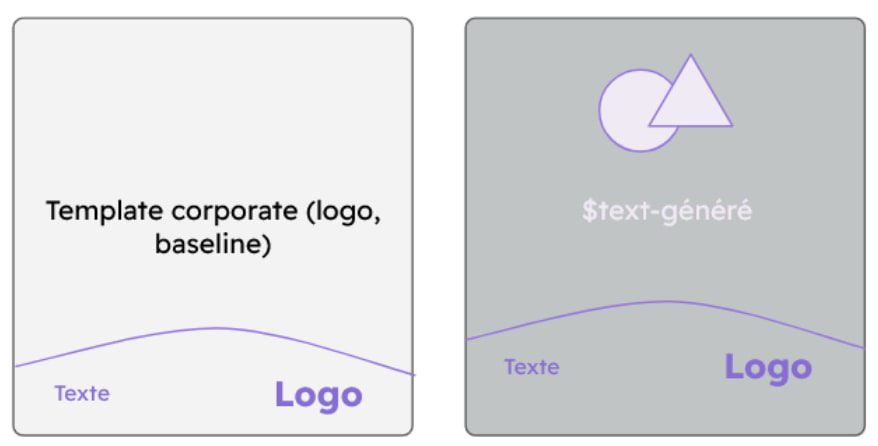
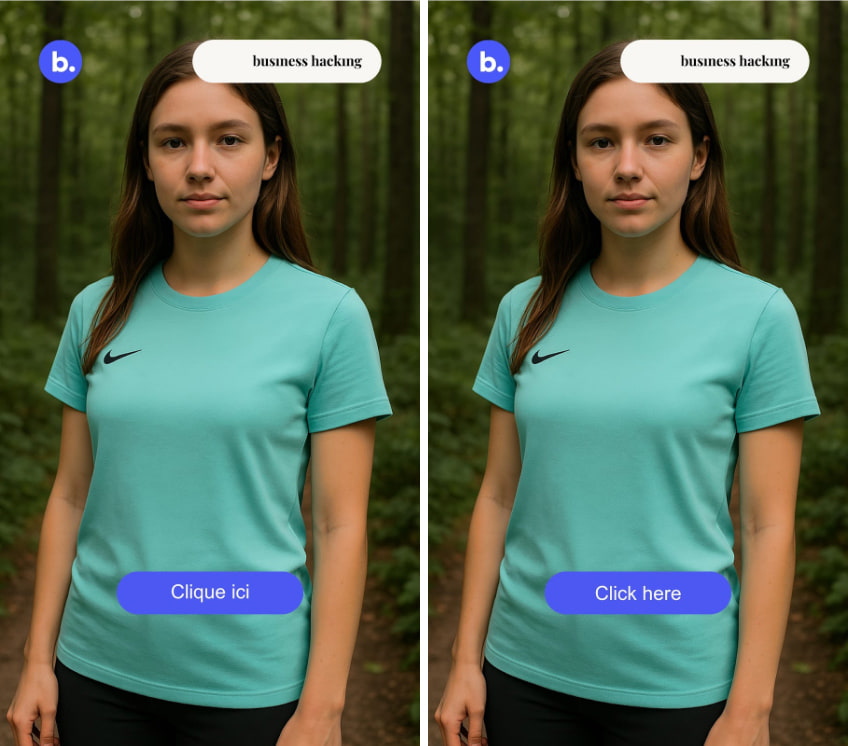
Depending on the campaign’s needs, text can be added directly onto the generated image, whether a strapline, a call to action or a promotional message.
The text to insert is defined beforehand. Once the content is chosen, it can be placed automatically on the visual through an intelligent positioning system, which secures good legibility and a good graphic balance.
In addition, if the campaign runs internationally, the text can be translated automatically into different languages through artificial intelligence, without human intervention. That allows considerable scalability in producing multilingual assets, while keeping the workflow fast and smooth.
Step 5: orchestrating the workflow
Once every step is defined and tested individually, they have to be chained together coherently and automatically. To that end we put an orchestration workflow in place, which runs each step in sequence, in the right order and with the right parameters.
That kind of automated chain secures a smooth process, from receiving the original asset through to delivering the final variants.
To orchestrate the pipeline we leaned on existing tools, among which several market solutions offer user-friendly interfaces and good compatibility with AI and image processing systems. Those orchestrators also allow real-time monitoring, detailed execution logs and mechanisms for resuming after an error.
Through AI-assisted decoupling, we test a wide range of messages and visuals dynamically, so as to identify which creatives have the most impact.
— Damien Fournier
Conclusion
Creating advertising assets automatically is a major step forward for marketing teams seeking efficiency, speed and visual coherence at scale. Through artificial intelligence, it is now possible to generate multi-format variants of one visual while preserving graphic quality and brand identity, and even to adapt the content dynamically to local or multilingual needs.
Our method, built on a rigorous chain of steps — from defining the formats to the final assembly through an orchestrator — cuts production costs sharply while speeding up time to market and making it easier to test many messages and creatives.
Although certain technological limits remain, notably around generating logos or typographic precision, the solutions we put in place — masking, light supervision, contextual adjustments — secure a professional result.
As AI technologies advance, this kind of pipeline will become an unavoidable norm for producing advertising assets at scale.
Going further
- Artificial intelligence8 publications
- Creativity and performance3 publications

The key skills bright can bring to you