


ChatGPT in Bing: a marketing opportunity?
Damien Fournier
· 3 min
Building ChatGPT into Bing is an interesting innovation, but nothing to get excited about yet. Better to include Bing in your media mix, follow how the sector moves, and stay alert.
Swipe left to read
Keep reading
Building ChatGPT into Bing is an interesting innovation, but nothing to get excited about yet. Better to include Bing in your media mix, follow how the sector moves, and stay alert.
For now reserved to that search engine specifically, and from the Microsoft Edge browser, the conversational agent will soon be usable from Chrome too — provided you leave Google for Bing.
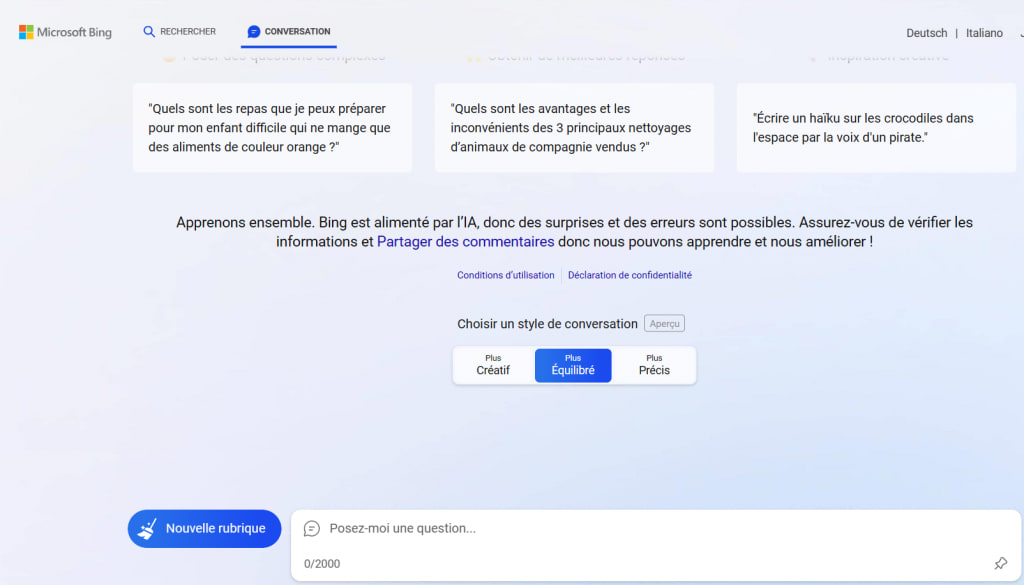
First, let us look at what it currently looks like:
If you have used ChatGPT, you will feel at home. The “Chat” tab built into Bing draws heavily on it, and lets you send queries to a conversational agent — with the difference that it gives answers that are up to date and of better quality, while citing its sources.
That said, what interests us above all is: the impact on digital marketing
For now, certain forms of pseudo-advertising can appear if you type specific queries. We can then see keywords carrying a footnote that sends the user to a page selling a product or a service — as in this example with “cheap swimsuits” and “sports shoes”, where the generated answer even takes the form of “Location” results.
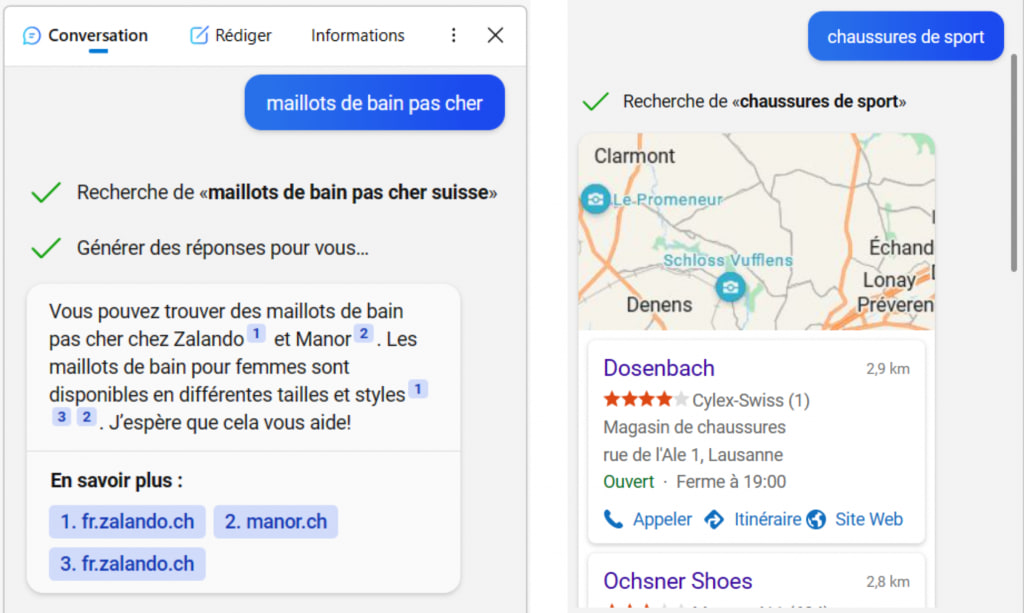
Even though such examples already exist, it is still too early to know exactly how advertising will evolve this way in the medium term — that is, within two or three weeks.
Among the most likely scenarios, according to our account manager at Bing, we might picture other advertising formats appearing too. As with the Shopping format, we might also see a suggestion of products matching our query, which can be clicked to reach an external site, as in the following examples.
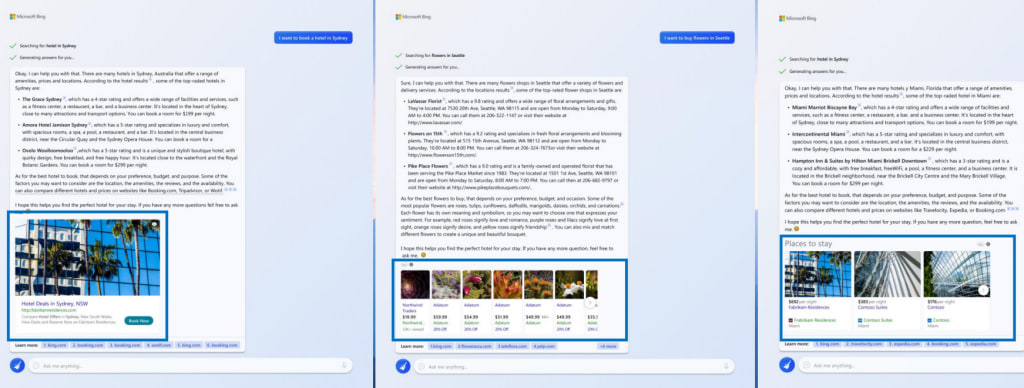
What does it mean for advertisers?
Our view of the effects to expect from building ChatGPT into the search engine is this:
As we said, we are still at an early stage and a number of things remain to be settled, but it is likely that in the short term we will see more use of Bing at Google’s expense, to “try” the tool. Even if that happens, it is not certain the shift will last. Perhaps the market share Bing gains through this strategy will prove marginal in the end, and advertisers will therefore not find it worth allocating extra budget to this media lever.
Either way, at bright we have long advised our clients to include Bing in their media mix. In our experience, the traffic is better qualified and the competition is thin. It is therefore an interesting channel in terms of cost and expected return. That is why Bing has its place in the media plans we build.
Another point that tempers our thinking on the impact for advertisers: on one hand it will take a while before this new technology is adopted by most users, and on the other, users may only use it to write content and look for information, and not as part of buying. If users want to buy a product or a service, they can go on using the “Search” tab — the standard search engine, which will stay as it is.
One more point: if all the important information is already available in the generated answer inside the “Chat” tab, why click an external link? In other words, what interest does a company have in making the effort to rank better (ChatBot optimisation?) or in doing ChatBot advertising?
Update, September 2026: both paths have taken shape, with Answer Engine Optimisation, to which we devoted an article in January 2026, and then the opening of ChatGPT Ads to Swiss advertisers.
Finally, we were told that Bing will automatically bring existing campaigns into this new “Bing Experience”. On that subject, it will apparently not be possible to set the placement, or rather the split of ads across the two tabs, “Chat” and “Search”. Campaign performance on the “Chat” channel (ChatGPT) therefore risks being impossible to monitor, which makes the impact hard to measure and to improve.
In conclusion, building ChatGPT into the Bing search engine is an interesting innovation that could affect digital marketing in time. But nothing to get excited about yet. We do nonetheless recommend including Bing in your media mix, keeping up with how the sector moves, and being patient. And at the rate these revolutions arrive, it is better to stay alert.
Going further
- Search and Google Ads11 publications
- Artificial intelligence8 publications
The key skills bright can bring to you