


Native channels: the key to quality traffic
Daniel Szenes
· 5 min
In Switzerland, native channels cost three to ten times less per click than SEA or social, but placement quality varies greatly. They become profitable when you favour the sources of highest quality.
Swipe left to read
Keep reading
In Switzerland, native channels cost three to ten times less per click than SEA or social, but placement quality varies greatly. They become profitable when you favour the sources of highest quality.
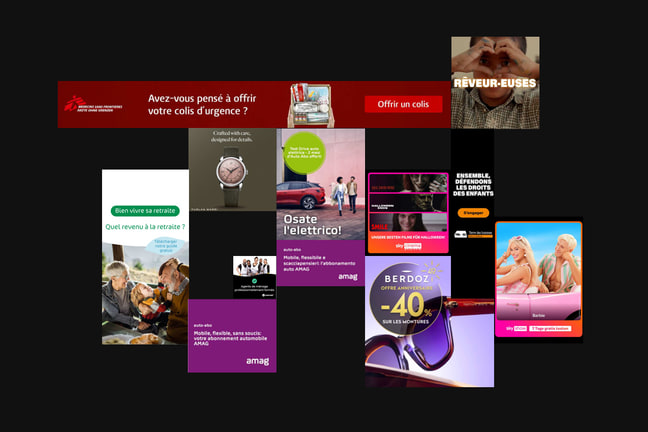
In digital marketing, native advertising is an ad format built into the heart of a website’s editorial content, so that ads appear in harmony with the site’s non-advertising elements.

This kind of ad is strongly present on news sites and on the online editions of the largest newspapers, and can be bought through various platforms, the best known being:

Unlike sponsored content or advertorials, which look similar, people who click these ads are sent directly to the advertiser’s site.
The advantages of native advertising
Among the broad categories of digital marketing — SEA, social and display — native is often filed under the last, although it stands apart by bringing several advantages.
Presence on the most visited news sites:
Most news sites in the world run native in one form or another. By running your ads on those sites you can generate a considerable amount of traffic from quality sources, which produce leads at a reasonable price and build your recognition.
Native placement:
Through a more harmonious integration into the site’s content, the format gives these ads an organic look, which avoids the too-obvious advertising feel display can have. Benefiting from the quality of the site and of the placement, native ads can often be more credible in users’ eyes, with a beneficial effect on performance.
A lower cost per click than other digital channels:
In Switzerland the main native channels — Taboola, Outbrain, Yahoo DSP — have CPCs between three and ten times cheaper than SEA or social advertising. Those channels can therefore be very profitable and bring leads at an interesting cost, even if the traffic quality is a little lower than on those other channels overall.
A few key elements deserve attention when using native advertising:
Site quality:
On platforms such as Taboola and Outbrain, where one and the same ad can run on hundreds or even thousands of different sites, the quality — the relevance — of the placements can vary greatly. It is not unusual for a piece to run both in a mobile game, an app, and on the home page of a digital newspaper. And depending on the ad in question, some placements may prove far more fitting and more profitable than others.
Placement quality:
Even on quality sites, the ads do not necessarily appear on the home page; they will often sit in a list of sponsored links at the foot of an article. How “native” they feel can also vary by site, with ads more or less well integrated into the organic content.
Geographic differences:
Worldwide, a great many sites carry Taboola/Outbrain ads — nearly all the German and French newspapers such as Bild or Le Figaro, which are also among the most visited news sites in Switzerland. Most of the equivalent Swiss sites, by contrast, do not use Taboola or Outbrain, and in some cases run no native at all.
Our recommendations
All these elements can weigh heavily on your native campaigns’ performance. Against that, a few best practices:
Identify the priority sites in advance:
With the considerable number of placements available through the platforms, it is often sensible to have a plan of priority sites before launching your campaigns. In drawing up that list, look at relevance to the audience sought, at the quality of the site and of the ad placement, and at the platform that runs the native ads on that site. If you have run native campaigns before, you can also look at those campaigns’ performance history by site, to help set an order of priority.
Favour the sites that perform:
Once you have an idea of the priority placements, there are several ways of favouring them. On Taboola or Outbrain you can set differentiated CPC bids by site, or block certain sites entirely. There are also contextual targeting options, to run the ads on pages tied to a theme such as news, finance or entertainment. Finally, if you really want to restrict reach to the best-performing placements, you can ask an account manager to create a whitelist, so that the ads run only on the sites in it.
Separate mobile from desktop:
It matters to have separate campaigns for the two kinds of device, with different CPC bids, because desktop traffic is often of higher quality and converts better into leads and purchases than mobile — but costs more per click. If you combine every device in one campaign with the same bids, the platform will favour mobile over desktop, at performance’s expense.
Pass useful information back into your back office:
To follow performance by site or by placement, there are dynamic URL parameters that pass back the site on which the ad ran. That lets you follow the leads from different placements through their whole journey down the conversion funnel, and identify the sites that bring the best-quality leads.
Vary the platforms you use:
Taboola and Outbrain are the best-known native platforms, because they run on the largest number of sites, but there are others with a more limited portfolio of placements — and a better-quality one.
Among the DSPs there is Yahoo’s in particular, which runs well-integrated native ads present on the home page, across every site in the Yahoo domain. That includes Yahoo Finance, which remains a reference for financial news. What is more, the CPCs match Taboola’s and Outbrain’s while the placement is generally of higher quality than what those two offer.
There is also the possibility of running native ads on some of the most visited news sites in Switzerland — Blick or the NZZ — through direct deals on platforms specific to the Swiss media. Those placements are often of better quality than what Taboola and Outbrain offer, but unlike Yahoo they cost a great deal more per click. It therefore matters to check carefully that the extra cost brings more conversions, or at least conversions of better quality.
In conclusion, running native campaigns for performance is often complicated, because of the great number of sites available in the platforms and the widely varying quality of placements. By following these best practices, and by favouring the highest-quality traffic sources — by channel, by site or by device — native advertising can perform very well and be profitable, and so add value to your media mix.
Going further
- Media and programmatic6 publications


The key skills bright can bring to you